
Does Your Batch Pasteurizer Meet PMO Requirements? What to Check Before You Buy

If you're shopping for a batch pasteurizer — sometimes called a vat pasteurizer, same machine, different name depending on who you ask — there's one question that matters more than price, capacity, or brand: will it actually meet PMO requirements for your state dairy inspection?
It's a question a lot of first-time buyers don't think to ask until an inspector asks it for them. Here's what you actually need to check before you buy.

What PMO Actually Requires From a Batch Pasteurizer
The Pasteurized Milk Ordinance (PMO) is the federal standard on which every state's Grade A dairy program is built. For batch pasteurization — the Low-Temperature Long-Time (LTLT) method — PMO specifies exact requirements that go well beyond "heat the milk and let it sit." A few of the basics:
Temperature: milk must reach at least 145°F (63°C) and hold there
Time: that temperature must be maintained for a full 30 minutes, continuously, with no drop
Agitation: continuous agitation throughout the holding period so every part of the batch reaches temperature evenly, not just the milk near the heating surface
Those are the requirements most buyers already know about. The ones that catch people out are further down in the construction details — and they matter just as much to an inspector.
The Construction Details Most Buyers Never Check
PMO doesn't just specify temperature and time. It specifies exactly how the pasteurizer itself has to be built, down to the outlet valve. These are the details worth checking on any unit before you buy it:
The outlet and outlet valve. The inside diameter of the outlet passage can't be less than the nominal inside diameter of a 1½ inch (38mm) pipe, and it has to be positioned so the pasteurizer drains completely — no low spots where milk can sit and pool after a batch is finished.

A leak-protection valve. PMO requires a leak-detector arrangement on the outlet valve, so that if the valve seat leaks, raw or unpasteurized milk can't cross into the pasteurized product line without being detected.

An air-space heating and indicating thermometer. In addition to the main product thermometer, PMO requires a separate thermometer that reads the air space temperature above the milk — used to confirm the space above the product is also heated correctly during the hold.

An approved indicating and recording thermometer. A digital display that shows the current temperature is not the same as an approved recording thermometer that produces a continuous, reviewable chart or log of the entire 30-minute hold. Inspectors need a record they can check after the fact, not just a number you glanced at during the run.
No threads on product-contact parts — including the legs. This is one people genuinely don't expect: PMO's 3-A Sanitary Standard requirements extend all the way down to the legs the unit stands on. Threaded fittings anywhere product residue or wash-down water can collect are a hygiene risk, so legs and mounting hardware need to meet 3-A standard construction just like the tank and valves do.
Miss any one of these and the unit doesn't meet PMO, no matter what the listing calls it or how good the temperature control looks on paper.
Where Buyers Get Caught Out
A few specific gaps come up again and again with lower-cost or non-commercial-grade pasteurizers:
An outlet that's undersized or poorly positioned. A narrower outlet, or one positioned so the tank never fully drains, is one of the more common construction shortcuts on cheaper units — and one of the easier things for an inspector to check.
No leak-protection valve at all. Some smaller or older-style units skip this entirely, which is an automatic compliance failure regardless of how well the pasteurization cycle itself performs.
Only one thermometer, not two. A single-product thermometer with no separate air-space-indicating thermometer misses a specific PMO requirement that's easy to overlook if you're only comparing "does it have a thermometer" between models.
Threaded legs or fittings. Standard threaded pipe legs are common on generic or repurposed equipment — and they're a straightforward compliance failure under 3-A standard construction rules.
No documentation provided at purchase. Even when a unit is genuinely built to spec, if it doesn't come with documentation demonstrating compliance with the 3-A Sanitary Standard for construction, you're left to prove it yourself to your inspector, which slows your approval process.
None of this means the equipment is unsafe to use for personal or small-scale cottage food production. It means it may not clear a Grade A inspection for commercial sale — which is a very different bar.
Batch Pasteurizer or Vat Pasteurizer — Does the Name Matter?
No. "Vat pasteurizer" and "batch pasteurizer" describe the same equipment and the same LTLT process — a jacketed vessel that heats a fixed volume of milk and holds it at temperature for the required time. "Vat" is the more traditional, older industry term you'll still see in dairy science textbooks and PMO language itself. "Batch" is the more common term buyers search for today. Some equipment catalogs use both terms interchangeably in the same sentence, and that's accurate — there's no meaningful technical difference between the two names.
What actually varies between models isn't the name, it's the build: capacity, heating method, control system, and whether it's engineered to the PMO specifics above.
Tessa's Batch Pasteurizers — Built to the Requirements Above
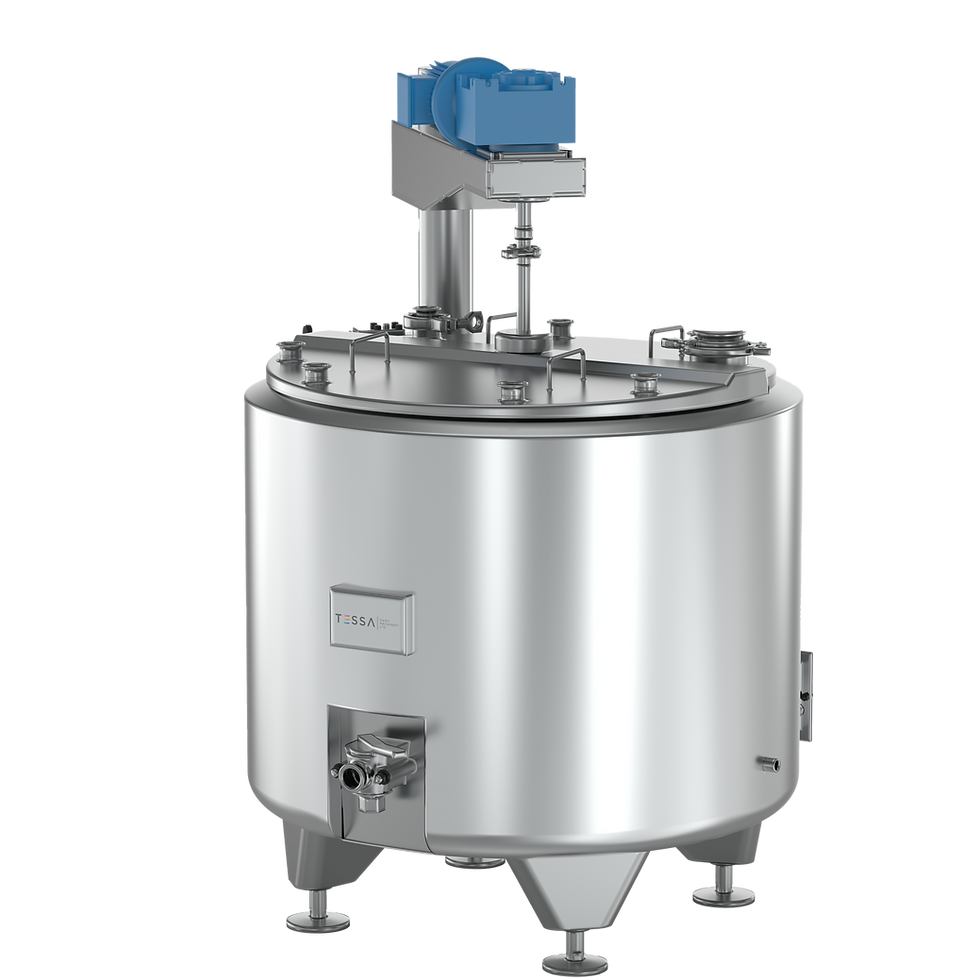
Tessa's batch pasteurizer line — the BT-50, BT-100, BT-150, and BT-200 — is built specifically around what PMO actually requires, down to the construction details most listings don't mention:
A properly sized and positioned outlet and outlet valve — 1½ inch (38mm) minimum inside diameter, positioned for complete drainage
A leak-protection valve on the outlet
Both an air-space heating and indicating thermometer and a separate approved indicating and recording thermometer
No threaded product-contact parts anywhere — including the legs, built to 3-A standard
Continuous agitation throughout the full hold cycle
Documentation provided with every unit so you're not left assembling proof of compliance on your own before your first inspection
BT-50 — 50 gallons per batch. The right starting point for small farmstead creameries and first-time commercial producers.
BT-100 — 100 gallons per batch. For creameries scaling beyond their first year of commercial pasteurization.
BT-150 — 150 gallons per batch. Built for growing operations running larger daily volumes.
BT-200 — 200 gallons per batch. Our highest-capacity batch unit, for commercial creameries and dairy plants running multiple products per day.
If you're building a complete line rather than a single machine, browse our full range of dairy processing equipment, including our 3A-compliant cream separators.
Questions to Ask Before You Buy Any Batch Pasteurizer
A few to start with: Does it hold 145°F for a full 30 minutes with continuous agitation? Is the outlet at least 1½ inch (38mm) and positioned so the tank fully drains? Does it have a leak-protection valve? Are the legs and fittings free of threads and built to 3-A standard?
There's more worth checking than fits in a single post — outlet placement, thermometer type, documentation, and a few other details that most often trip up first-time buyers. We put the complete list into a free downloadable checklist so you can walk into a purchase, or an inspection, knowing exactly what to look for.
We're putting together a downloadable checklist covering these details in full — check back soon, or contact us directly if you have questions before you buy.
The Bottom Line
A batch pasteurizer and a vat pasteurizer are the same machine. What actually matters is whether the specific unit you're buying is built and documented to meet PMO's LTLT requirements — temperature, time, agitation, outlet construction, leak protection, dual thermometers, and thread-free 3-A standard fittings down to the legs — not just how it's labeled or priced.
If you're setting up a Grade A pasteurization line and want equipment that's built around those requirements from the start, get in touch, and we'll help you spec the right model for your daily volume.
Comments